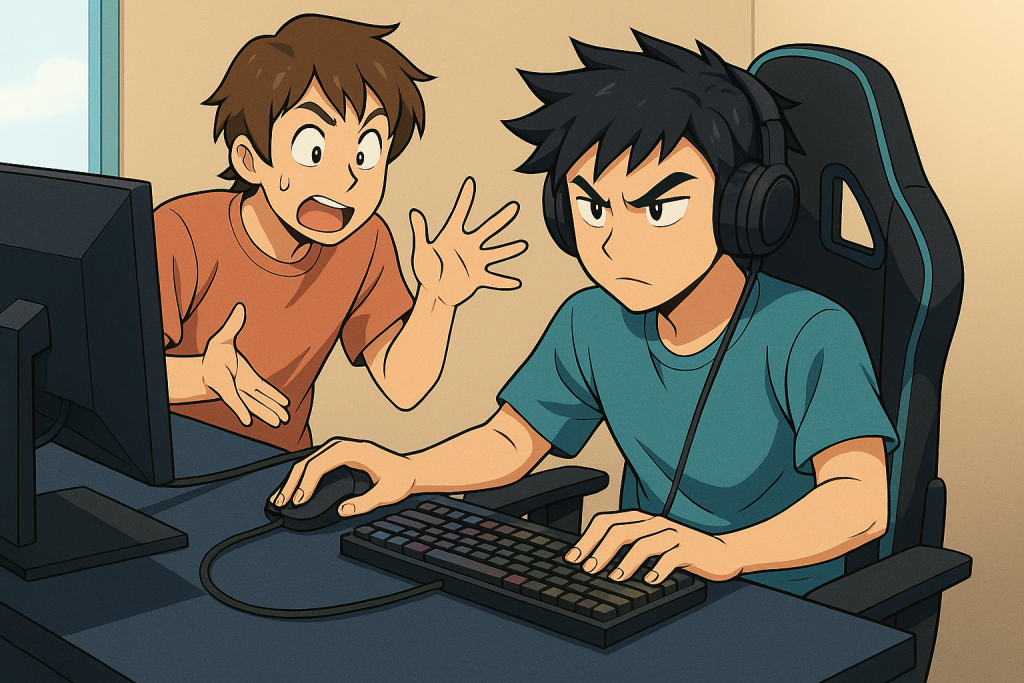
If you’ve ever played a game with someone hovering behind you, telling you what to do every step of the way, congratulations — you’ve experienced backseat gaming.
Whether it’s a well-meaning friend on the couch or a stranger in Twitch chat flooding you with tips you didn’t ask for, backseat gaming is a shared frustration for many players. But What Is Backseat Gaming, why does it happen, and why can it be so annoying?
Let’s break it down.
What is Backseat Gaming?
Backseat gaming is a term borrowed from “backseat driving,” where a passenger tries to control the driver by giving unsolicited directions. In gaming, it refers to someone who isn’t playing but constantly gives advice, commands, or critiques to the person who is.
It often sounds like:
- “You missed a chest back there.”
- “Why didn’t you use your health potion?”
- “No, go that way!”
- “You should’ve built more towers instead.”
It happens across all genres — from competitive titles like Dota 2, League of Legends, and Valorant, to story-driven games like The Last of Us or Elden Ring.
Sometimes it’s a friend who just wants to help. Other times, it’s a viewer in a Twitch stream who thinks they know better. Either way, it can quickly become intrusive.
Why Do People Backseat Game?
Backseat gaming is usually driven by a mix of enthusiasm, impatience, and sometimes ego. Here are the most common motivations:
- They think they’re helping: Many backseat gamers are genuinely trying to assist, especially if they’ve played the game before and want to share their knowledge.
- They’re too emotionally invested: Watching someone play a game you love can be frustrating when they miss things you find obvious or play “the wrong way.”
- They want to feel in control: Especially in competitive games, some people find it hard to stay silent when watching someone make decisions they wouldn’t make themselves.
- They want to show off: Let’s face it – some people just like to prove they know more.
Real Player Reactions to Backseat Gaming
Plenty of gamers have vented about backseat gaming on forums, streams, and social media. Here are some quotes that perfectly sum up the experience:
“It’s like trying to enjoy a meal while someone critiques every bite you take.”
— Reddit user, r/gaming
“If I wanted help, I would’ve asked for it. Let me fail, that’s part of the fun.”
— Twitch streamer during a Dark Souls run
“My brother literally can’t watch me play a game without taking the controller. That’s not bonding, that’s theft.”
— User comment on a YouTube gaming video
“Backseat gamers turn a chill session into a quiz show where I’m always losing.”
— Steam forum user
While some players tolerate it, many feel pressured, rushed, or even patronized. This is especially true for streamers, who may be trying to focus, entertain, and enjoy the game — all while chat throws instructions at them.
When Is It Okay?
Backseat gaming isn’t inherently evil. It becomes a problem when it’s uninvited or constant.
Here are cases where it might be okay:
- The player asks for help or tips
Example: “Hey chat, I’m stuck here. Any suggestions?” - You’re co-oping or coaching
Example: A friend learning how to play Dota 2 might appreciate real-time tips. - You set boundaries clearly
Some players are okay with advice, but only during breaks, or only for mechanics — not strategy.
What matters is consent and timing. It’s one thing to say, “You might’ve missed a door back there,” and another to constantly shout commands.
How It Affects Streamers and Viewers
In the world of live streaming, backseat gaming is practically a genre of its own. Streamers often include disclaimers in their channel descriptions:
- “No backseating unless asked.”
- “Blind playthrough – please don’t spoil or help.”
Despite this, many streamers report a constant barrage of unsolicited tips.
Why is it such a problem?
- Spoilers – Viewers may unintentionally (or intentionally) spoil puzzles, story twists, or boss fights.
- Pressure – Constant advice makes the player feel like they’re being tested, not entertained.
- Loss of immersion – Especially in narrative games, interruptions break focus and enjoyment.
Some streamers have even created bots or automated messages to warn backseaters to stay quiet unless invited.
How to Handle a Backseat Gamer
If you’re dealing with someone who won’t stop giving advice, here are some tips:
- Set clear boundaries – Politely say: “I’d prefer to figure this out on my own, but I’ll ask if I need help.”
- Use humor – Sometimes defusing the situation with a joke keeps things friendly: “Backseat gaming detected! Deploying mute button.”
- Create a safe zone – If you’re streaming, include a panel or pinned comment with your expectations.
- Have a timeout policy – On platforms like Twitch, don’t be afraid to time out or ban repeat offenders.
- Take breaks and let them help then – If a friend keeps commenting while you’re gaming, pause and ask for feedback during a break — not mid-fight.

Hello, my name is Lora Zaharieva. I love video games and I spend a big chunk of my time in front of my pc. I have studied English language for the past 10 years. There is nothing better than combining the pleasant with the useful, and for this reason I decided to start writing articles in English related to the gaming industry. I am an ambitious person and when I like something, I want to improve as much as possible.