
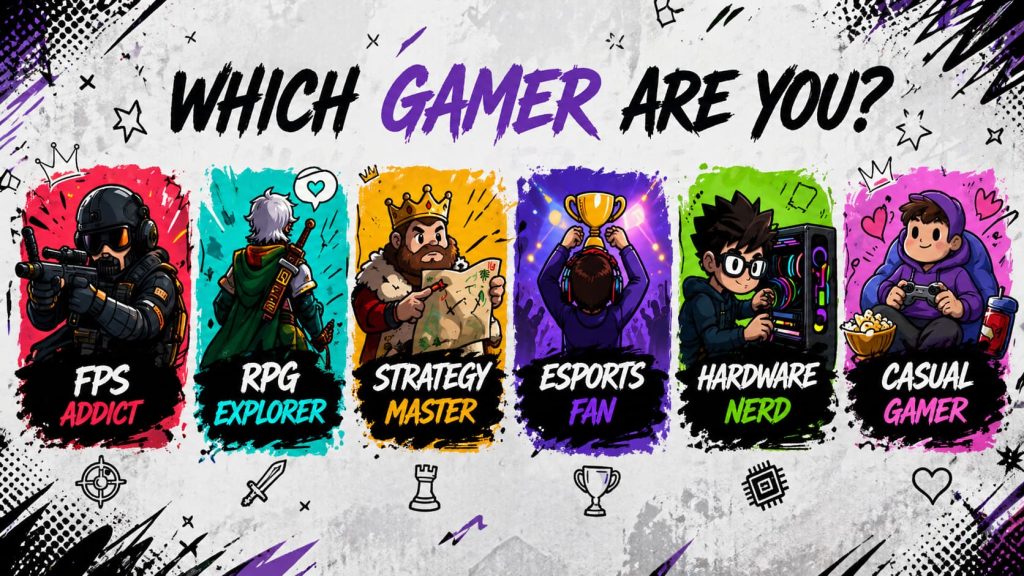
Gaming means something different to everyone. For some people, it is a competitive hobby where skill matters and every match feels like a challenge. For others, it is a way to relax, explore stories, or spend time with friends. Over the years, gaming has grown so much that certain player personalities have naturally formed around different genres.
The games you enjoy usually say a lot about how you approach gaming. Some players want fast action and pressure, while others prefer slower experiences where they can explore, think, or simply switch off after a busy day. Most gamers are not locked into one category forever, but many tend to lean toward a certain style.
You might already know exactly what type of gamer you are, or you may recognize yourself in several of these groups.
FPS Addict

The FPS Addict is usually the player who enjoys competition the most. These gamers thrive in fast matches where reaction speed matters and mistakes are punished quickly. They enjoy the pressure of ranked systems, close fights, and moments where split-second decisions decide the outcome.
FPS stands for First-Person Shooter, a genre built around combat viewed through the eyes of the character. Games in this category are often focused on aiming, movement, teamwork, and map awareness. Players who love FPS titles usually spend time improving mechanics, practicing aim, and learning how to react under pressure.
Titles such as Counter-Strike 2, Valorant, Call of Duty, Apex Legends, Rainbow Six Siege, and Battlefield are common choices. These games reward precision and consistency, which is why FPS players often become very competitive. It is also common for this type of gamer to care about performance settings, mouse sensitivity, refresh rate, and low latency because even small technical differences can affect gameplay.
RPG Explorer

The RPG Explorer has a very different relationship with gaming. Instead of chasing quick wins or rankings, this player values immersion and storytelling. RPG stands for Role-Playing Game, a genre where progression, world-building, and character development are often the main focus.
These gamers enjoy discovering new locations, talking to characters, collecting items, and completing side quests. They are usually the players who refuse to skip dialogue because they want to understand the story fully. Exploration is often more important than speed.
Games like The Witcher 3, Skyrim, Elden Ring, Baldur’s Gate 3, Cyberpunk 2077, Dragon Age, and Fallout attract this type of gamer because they offer large worlds and deep narratives. RPG players may spend dozens of hours inside a single game because they enjoy the experience of slowly uncovering everything it has to offer.
Strategy Master
Strategy gamers enjoy planning more than reacting. They like games where patience matters and where success comes from making smart decisions rather than relying on reflexes.
A Strategy Master usually enjoys thinking ahead, solving problems, and analyzing situations. These players often feel satisfaction when a long-term plan finally works exactly as expected. Strategy games are less about speed and more about timing, positioning, and understanding systems.
Popular examples include Civilization VI, Age of Empires, StarCraft II, Total War, Crusader Kings, XCOM, and Company of Heroes. These games require attention to detail and reward careful thinking.
Players in this category often enjoy complexity. Learning rules, understanding mechanics, and experimenting with different outcomes becomes part of the fun. Strategy gamers are often patient enough to spend hours mastering systems that other players might find overwhelming.
Esports Fan
Not every gamer spends most of their time playing. Some enjoy watching competitive gaming just as much, if not more.
The Esports Fan follows tournaments, professional players, and gaming communities in the same way traditional sports fans follow football or basketball. Watching matches, discussing teams, and keeping up with tournament results becomes part of the hobby.
Popular esports titles include Dota 2, League of Legends, Counter-Strike 2, Valorant, Rocket League, Fortnite, and Overwatch 2. These games have strong competitive scenes with professional leagues and major events.
Esports fans often understand gameplay deeply because they watch professionals perform at a high level. Even if they do not play competitively themselves, they usually appreciate strategy, teamwork, and advanced mechanics. Many enjoy predicting match results, supporting favorite teams, and following player transfers.
Hardware Nerd
The Hardware Nerd enjoys gaming, but also cares deeply about the setup behind the experience. For this player, performance and technology matter almost as much as the games themselves.
These gamers often research processors, graphics cards, cooling systems, monitors, keyboards, and gaming accessories. Building or upgrading a PC can feel just as rewarding as finishing a game.
Hardware-focused gamers usually enjoy experimenting with settings, checking frame rates, and comparing performance between components. They may spend time watching benchmark videos or reading about the latest technology releases.
Games such as Cyberpunk 2077, Microsoft Flight Simulator, Red Dead Redemption 2, Star Citizen, and Forza Horizon 5 are popular because they showcase graphics and push modern hardware. This gamer type is often the first to notice visual upgrades or small performance differences.
Casual Gamer

The Casual Gamer plays without pressure. Gaming is not about competition or optimization but simply about enjoyment.
These players usually choose games that are easy to understand and relaxing to play. They may not spend long hours gaming every day, but they still enjoy it as a hobby.
Titles such as Stardew Valley, Animal Crossing, Sims 4, Minecraft, Fall Guys, Mario Kart, and many mobile games fit naturally into this category. These games often feel approachable and do not require heavy commitment.
Casual players enjoy flexibility. They can play for twenty minutes or several hours without feeling pressure to perform. For many people, gaming becomes a way to unwind after work or escape daily stress for a while.
Which Gamer Type Are You?
Most players are not limited to one category. Someone may enjoy FPS games during competitive moods but switch to RPGs when they want a slower experience. Others may follow esports while also spending time experimenting with gaming hardware.
Gaming styles change over time. Interests shift depending on mood, age, available free time, or even life circumstances. A person who once loved competitive shooters might later become more interested in strategy games or relaxing experiences.
The good thing about gaming is that there is no single correct way to enjoy it. Some players want adrenaline, others want stories, and some simply want a comfortable escape.
No matter which category feels closest to you, there is always another game that matches your style. That variety is what keeps gaming interesting and allows different communities to grow around different experiences.

I’m Alex Mercer, a senior gaming and esports writer at GamingImba. I’ve been involved in gaming for as long as I can remember, and for more than a decade I’ve been writing about competitive play, industry trends, and the culture that grows around games.
My work focuses on esports, online gaming platforms, and how technology continues to shape the way people play, compete, and connect. I’m especially interested in meta shifts, balance changes, and the business decisions that influence modern games behind the scenes.
At GamingImba, I aim to break down complex topics in a way that’s clear, honest, and useful—whether that means analyzing a major tournament, exploring new gaming platforms, or looking at how player behavior evolves over time.
I follow global esports scenes closely, experiment with different games and mods in my free time, and enjoy digging into the details that most players notice but rarely stop to question.


