
There’s something particularly annoying about a horror game that starts stuttering just as you’re trying to escape whatever’s chasing you. It’s hard to be scared of a monster when you’re too busy staring at a frozen screen.
That’s worth thinking about if you’re playing on a regular laptop rather than a gaming machine. The Lenovo IdeaPad 5 I’m using as a reference has an Intel Core i5-1135G7, Intel Iris Xe Graphics, and 16 GB of RAM. It’s perfectly capable of running plenty of games, but asking it to handle the latest graphics-heavy releases isn’t always a great idea.
The good news is that horror games don’t necessarily need impressive graphics to be frightening. An old computer displaying a message it shouldn’t, an empty school corridor, or a radio picking up a voice from nowhere can be enough to make you uncomfortable.
I went looking for games that use those ideas well, with a few more demanding titles thrown in for variety. Some are genuinely frightening, others are closer to supernatural mysteries, and a couple will have you spending more time thinking than running for your life.
Here are ten worth looking at, along with what I’d expect from them on an Intel Iris Xe laptop. The suggested settings come from the published requirements and the hardware’s capabilities, not from testing all ten games on this particular Lenovo.
1. Alien: Isolation (2014)
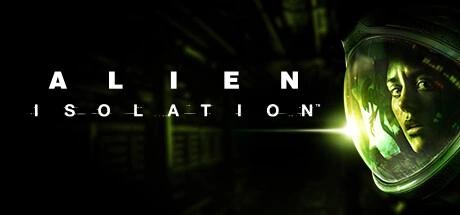
Imagine being stuck on a space station with a creature you can’t kill, while almost everyone left alive seems determined to make your situation worse. That’s pretty much the experience Alien: Isolation has waiting for you.
You play as Amanda Ripley, the daughter of Ellen Ripley from the Alien films. She’s searching for information about her missing mother, which takes her to the Sevastopol space station. Things are already falling apart when she arrives, and it doesn’t take long to discover that something extremely dangerous is loose.
The alien isn’t a boss you defeat after finding the right weapon. It’s a problem you have to live with. You’ll spend time hiding under desks, listening to noises coming through ventilation shafts, and wondering whether it’s safe to cross a room. The creature can respond to what you’re doing, so even a route that seemed safe a moment ago might become dangerous.
I particularly like the station itself. The chunky computers, old-fashioned monitors, machinery, and flickering lights make it feel like an actual location rather than a collection of horror levels. Even without the alien, Sevastopol wouldn’t be somewhere I’d want to spend the night.
There’s one catch for our Lenovo. Alien: Isolation is the kind of older game that can still put noticeable pressure on integrated graphics. Its official minimum requirements include 4 GB RAM and a graphics card such as the GeForce GT 430 or Radeon HD 5550, while the recommended hardware is considerably stronger.
I’d give it a try at 1280×720 on Low settings before experimenting with anything higher. There are demonstrations of the game running on comparable Iris Xe hardware, but that isn’t a promise of smooth performance on every laptop.
It’s probably the riskiest recommendation here from a performance perspective, although the game itself is absolutely worth knowing about.
2. Outlast (2013)

Somebody should have told Miles Upshur that visiting an abandoned psychiatric hospital alone, at night, with nothing but a video camera was a terrible idea.
Miles is an investigative journalist who receives a tip about disturbing experiments at Mount Massive Asylum. Naturally, he decides to investigate. Within minutes, his plans begin falling apart, and finding a way out becomes a much bigger priority than writing a story.
Outlast doesn’t let you fight back. When something starts chasing you, the sensible options are to run or hide. You might squeeze into a locker, crawl under a bed, or rush through a corridor hoping there’s somewhere safe at the other end. Often, you’ll have no idea whether you’ve made the right decision until it’s too late.
Your video camera is another source of trouble. Its night vision makes dark rooms easier to navigate, but it uses batteries, and you never seem to have enough of them. Running out at the wrong moment can make an already unpleasant situation considerably worse.
This is a pretty aggressive horror game, and I don’t mean that as criticism. It has violent imagery, sudden scares, and plenty of encounters designed to make you panic. Personally, I prefer its quieter moments, when you hear something moving nearby but can’t see what it is.
The original 2013 release asks for a dual-core processor, 2 GB RAM, and a GeForce 9800 GTX-class graphics card at minimum. Those are modest requirements today, although the old dedicated GPU can’t be compared directly with Iris Xe.
Starting at 900p with Low settings seems reasonable for the Lenovo. If it behaves well during chase sequences, trying 1080p would be the next step.
Outlast is a good pick if you want something intense and don’t mind having absolutely no control over the creatures trying to catch you.
3. Little Nightmares (2017)
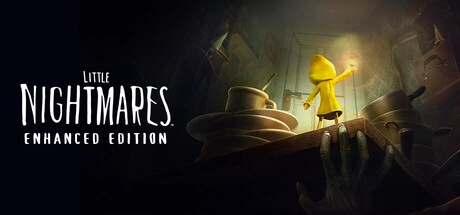
I have a weakness for games that manage to make ordinary objects look terrifying. Little Nightmares does this exceptionally well.
You control Six, a tiny girl in a yellow raincoat who’s trying to escape a strange place called the Maw. Everything is far too big for her. A kitchen becomes an enormous obstacle course, furniture towers above her, and the people she encounters look like they’ve stepped out of somebody’s worst childhood nightmare.
The game doesn’t explain much. You move through different areas, solve small environmental puzzles, climb objects, and try to avoid being caught. Some scenes make sense immediately, while others leave you wondering exactly what you’ve just witnessed.
Its creatures are the real stars, although I wouldn’t want to meet any of them. The Twin Chefs, for example, turn an ordinary kitchen into a genuinely unpleasant place. Watching them work while trying to sneak past is both ridiculous and disturbing.
Little Nightmares is often described as a puzzle-platformer, but that makes it sound considerably more innocent than it is. There’s a constant feeling that Six doesn’t belong in this world and that everything around her is dangerous.
Unfortunately, it isn’t quite as lightweight as the visual style might suggest. The official minimum GPU is a GeForce GTX 460, with 4 GB RAM also required. The Lenovo’s processor is suitable, but the graphics side deserves more caution.
I’d begin at 720p with Low settings and see how it handles the busier rooms. Anyone expecting guaranteed Full HD performance from Iris Xe should temper those expectations.
Still, I wouldn’t leave Little Nightmares off the list. Its unsettling artwork gives it a personality that’s difficult to confuse with anything else.
4. INSIDE (2016)
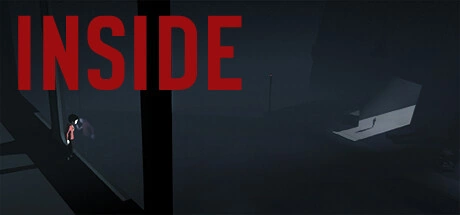
INSIDE starts with a boy running through a forest. You don’t know who he is, why he’s running, or what the people searching for him intend to do.
And the game isn’t particularly interested in explaining.
You move through forests, industrial facilities, flooded rooms, and increasingly strange locations. Sometimes you’ll need to hide, sometimes you’ll operate machinery, and occasionally you’ll encounter something that makes you wonder what kind of place you’ve wandered into.
There are puzzles, but most fit naturally into the surroundings. You’ll push objects, work out how to reach inaccessible areas, and use whatever equipment happens to be nearby. The controls are simple enough that you’re rarely distracted by learning new mechanics.
What sticks with me about INSIDE is the atmosphere. Its muted colors, distant sounds, and carefully arranged scenes create a feeling that something is terribly wrong, even when nothing dangerous is happening on the screen.
The ending is another reason people still discuss this game. I’m not going to spoil it, but it’s the sort of conclusion that might send you searching for other people’s interpretations afterward.
INSIDE arrived in 2016, with minimum requirements listing 4 GB RAM, a Core 2 Quad Q6600, and graphics such as the GeForce GT 630 or 650M. It isn’t extremely demanding, but the detailed 3D environments make it more challenging than a typical 2D indie game.
For an Iris Xe laptop, I’d begin around 1600×900 with reduced graphics settings. If everything feels responsive, 1080p is worth checking.
It’s also quite different from Outlast. You won’t spend the entire adventure being chased around by enemies, and the slower sections give the strange world time to get under your skin.
5. Oxenfree (2016)
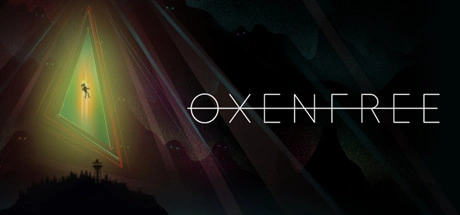
A group of teenagers, an island with a disturbing history, and a radio that starts picking up things it shouldn’t. You can probably guess that the weekend isn’t going to end particularly well.
In Oxenfree, you play as Alex, who arrives on Edwards Island with her stepbrother Jonas and a few friends. They’re initially there to have fun, but experimenting with a portable radio sets off a chain of supernatural events.
The radio is more than an object you carry around. You’ll tune through frequencies to uncover clues, hear strange transmissions, and interact with things that don’t behave normally. Sometimes the sounds coming through it are far more unsettling than anything you can see.
But the conversations are what really make Oxenfree interesting.
Characters speak while you’re walking around, and you can respond without stopping the action. You might interrupt someone, answer a question, or say nothing at all. Those choices influence how people feel about one another and how parts of the story unfold.
I like that the teenagers don’t always behave sensibly. They get irritated, say the wrong things, argue about personal issues, and occasionally seem more worried about their relationships than the supernatural disaster unfolding around them. It makes them feel like people rather than characters waiting to deliver clues.
Oxenfree is also one of the more reasonable options for this hardware. Its minimum requirements include a 2.0 GHz Intel Core i3, 2 GB RAM, and Shader Model 3.0-compatible graphics with 1 GB video memory. Intel Iris Xe uses shared memory, so that last requirement isn’t a direct comparison, but the overall demands are relatively modest.
I’d start at 1080p with Medium settings.
If you enjoy mysteries with dialogue and character relationships, Oxenfree might be more appealing than a traditional horror game. It has its creepy moments, but it doesn’t spend the whole time trying to scare you out of your chair.
6. Detention (2017)

Detention is one of those games I wouldn’t recommend playing while distracted by your phone. Quite a lot of its story is hidden in small details, and missing them takes something away from the experience.
The game is set in 1960s Taiwan, during the country’s period of martial law. Two students find themselves trapped inside Greenwood High School, although the building no longer resembles an ordinary school. The hallways are deserted, strange creatures have appeared, and the things they discover begin revealing a much darker story.
There’s a mixture of Taiwanese folklore, supernatural horror, and historical themes here. The school setting isn’t just a convenient place to hide monsters. It’s closely connected to the story and the political climate in which the characters live.
Detention uses hand-drawn 2D artwork, with characters moving through classrooms, corridors, and other locations. You’ll search for clues, solve puzzles, and occasionally need to avoid hostile spirits. The soundtrack and background noises do a lot of the work, which is impressive considering how little movement there sometimes is on the screen.
I found its approach more interesting than another collection of jump scares would have been. Some of the uncomfortable moments have nothing to do with ghosts.
And for our laptop, things look encouraging. The official minimum requirements mention a Core 2 Duo 2.4 GHz processor, 4 GB RAM, and GeForce 9600 GS or Radeon HD 4000-series graphics.
Those are relatively light requirements, making 1080p with standard settings a sensible starting point on Iris Xe.
There’s no need to oversell Detention. It’s a fairly short game with a particular style of storytelling, and it won’t appeal to everyone. But if the historical setting and psychological horror interest you, it deserves attention.
7. The Coma: Recut (2017)

Apparently, Korean high schools are even more stressful in horror games than they are in real life.
In The Coma: Recut, Youngho falls asleep during an exam and wakes up in a nightmarish version of Sehwa High School. The familiar classrooms and corridors have become dark and dangerous, and something is hunting him.
Unlike Detention, which spends a lot of time building its story through atmosphere and discoveries, The Coma puts more emphasis on escaping danger. You’ll search rooms, collect useful objects, read documents, and try to figure out what has happened to the school.
Running away is a regular part of the experience. You can hide in certain places, but enemies won’t conveniently disappear just because you’ve decided to stop moving. Getting caught can be frustrating, particularly when you’re still trying to work out where you’re supposed to go.
The hand-drawn art gives the school an appealing comic-book look, and the locations are detailed enough to reward exploring. I also like the contrast between the ordinary school environment and the increasingly unpleasant things you discover inside it.
The Recut edition was released in 2017, updating the earlier game with changes to its artwork, animation, and gameplay. It lists a Core 2 Duo processor, 2 GB RAM, and hardware-accelerated 3D graphics among its minimum requirements.
That’s encouraging for Intel Iris Xe. I’d leave it at 1080p with standard settings initially, checking that everything runs properly on Windows 11.
If the idea of exploring a haunted school appeals to you but you want more immediate danger than Detention provides, The Coma is probably the better match.
8. Stories Untold (2017)

One of the stranger things about Stories Untold is that sitting in front of an old computer can become genuinely unsettling.
The game opens with a text adventure called The House Abandon. You’re given a computer, some instructions, and a situation that gradually becomes much less ordinary than it first appears.
Typing commands and reading responses doesn’t sound particularly exciting on paper. Give it a little time, though, and you’ll understand why the presentation works. You’re concentrating so closely on the monitor that every unusual message begins to feel important.
There are four episodes in total, and the gameplay changes as you move through them. At different points you’ll interact with electronic equipment, examine information, and follow instructions while trying to piece together what connects the events.
The whole thing has a strong 1980s atmosphere. Old displays, physical switches, blinking lights, and electronic sounds help sell the setting. It’s very different from the kind of game where you spend most of your time walking through abandoned buildings with a flashlight.
I wouldn’t describe Stories Untold as a conventional survival horror game. It’s closer to an experimental mystery that occasionally manages to make you very uncomfortable. Some puzzles may require patience, especially if you’re not used to reading instructions carefully.
The published minimum requirements are fairly modest: an Intel Core Duo or faster, 2 GB RAM, DirectX 9.0, and around 400 MB of storage. There’s no clearly identified minimum GPU model in those specifications, so it’s harder to make a precise hardware comparison.
Still, 1080p with the default settings is where I’d begin on the Lenovo. Its small environments and relatively modest requirements make it a promising candidate, although the final result needs to be checked in actual gameplay.
If you’re looking for something unusual after playing several conventional horror games, I’d put this fairly high on the list.
9. World of Horror (2023)\

World of Horror looks like something somebody discovered on a forgotten computer from the early 1990s. That’s a compliment.
The game takes place in Shiokawa, a Japanese town where increasingly bizarre incidents suggest that ancient, terrifying forces are beginning to return. You investigate mysteries involving strange disappearances, disturbing rituals, and creatures that really shouldn’t exist.
Its artwork is inspired by Japanese horror manga, especially the unsettling imagery associated with Junji Ito, along with cosmic horror influences from H. P. Lovecraft. Much of the art was created using Microsoft Paint, and the limited-color presentation makes the game immediately recognizable.
It’s also not quite the straightforward adventure you might expect. World of Horror borrows ideas from RPGs and roguelikes. You’ll manage resources, make decisions, encounter random events, and deal with turn-based battles. Sometimes surviving means knowing when to avoid a fight rather than trying to win every encounter.
The difficulty can be unforgiving, particularly when you’re unfamiliar with its systems. But the unpredictability is part of the appeal. One investigation may go fairly smoothly, while another falls apart because of an unfortunate decision.
What surprised me most when looking at its requirements is how little graphics hardware it asks for, despite being one of the newer releases in the article.
World of Horror reached its full release in 2023, after spending several years in Early Access. Its official minimum requirements include an Intel Core i3, 1 GB RAM, and Intel HD Graphics 4400.
That’s a very encouraging combination for the IdeaPad 5. I’d use 1080p with default settings, with no particular reason to begin by reducing visual quality.
Of all ten games, this is among the easiest to justify from a hardware perspective. Whether you’ll enjoy it depends more on your tolerance for difficult RPG mechanics and disturbing pixel art.
10. The Room (PC Edition, 2014)

I’ll admit that The Room is stretching the horror label a little. It isn’t particularly interested in frightening you, but it does have enough strange objects, unsettling sounds, and unanswered questions to belong in a mystery collection.
Most of the game involves examining elaborate mechanical boxes. You’ll turn objects around, look for hidden switches, study symbols, and try to understand how various mechanisms fit together.
Sometimes the solution is right in front of you, and you simply haven’t noticed it. Other times you’ll spend several minutes experimenting before realizing that a tiny detail on one side of the box affects something completely different.
The Room is especially good at making mechanical objects feel believable. Gears move, compartments slide open, and hidden mechanisms react to your actions. There’s a satisfying little moment of discovery whenever a complicated piece finally clicks into place.
A mysterious story involving alchemy and unusual correspondence gradually develops in the background. It gives the puzzles a reason to exist without constantly interrupting you with lengthy conversations.
The original game appeared on mobile devices in 2012, while the enhanced PC edition followed in 2014. Its minimum requirements include a 2.0 GHz dual-core processor, 2 GB RAM, and graphics with 512 MB video memory.
For Iris Xe, I’d start at 1080p with the default settings. The small environments make it a sensible candidate for the Lenovo, although the published video memory requirement isn’t directly equivalent to integrated graphics using shared RAM.
The Room is probably the game I’d choose when I want to solve something interesting without spending the evening running away from monsters. It’s also a nice change of pace after something as intense as Outlast.
Which Horror Games Make the Most Sense for Intel Iris Xe?
If I were installing these games on the Lenovo IdeaPad 5, I wouldn’t treat them all the same. Detention and World of Horror have much lighter graphics requirements than Little Nightmares or Alien: Isolation, and there’s no reason to pretend otherwise.
Here’s where I’d begin with each game.
| Game | Minimum RAM | Starting Settings | Expected Suitability |
| Alien: Isolation | 4 GB | 720p, Low | Needs testing |
| Outlast | 2 GB | 900p, Low | Good candidate |
| Little Nightmares | 4 GB | 720p, Low | Needs testing |
| INSIDE | 4 GB | 900p, Low | Good candidate |
| Oxenfree | 2 GB | 1080p, Medium | Very good candidate |
| Detention | 4 GB | 1080p, Standard | Very good candidate |
| The Coma: Recut | 2 GB | 1080p, Standard | Very good candidate |
| Stories Untold | 2 GB | 1080p, Default | Promising |
| World of Horror | 1 GB | 1080p, Default | Excellent candidate |
| The Room | 2 GB | 1080p, Default | Very good candidate |
Performance disclaimer: The settings and suitability ratings above are based on official PC requirements and the capabilities of Intel Iris Xe, not FPS benchmarks performed on this particular Lenovo. Actual results may vary depending on graphics drivers, cooling, background applications, and game updates. Older titles can also have compatibility problems with Windows 11, even when the hardware is powerful enough. None of these recommendations guarantees a specific frame rate.
There’s one practical thing I’d check before installing anything: available memory. The laptop has 16 GB RAM, but some of that will already be occupied by Windows, browsers, and other applications. Since Iris Xe also uses system memory for graphics, keeping unnecessary programs open can make matters worse.
I’d also keep the charger connected for games such as Alien: Isolation and Little Nightmares. Power-saving settings can reduce performance, and the last thing you want is a sudden slowdown in the middle of a chase.
As for the games themselves, I wouldn’t start with the two most demanding ones. Detention, Oxenfree, or World of Horror make more sense if you want to get straight into playing without spending too much time experimenting with graphics settings.
So, What Would I Play First?
That depends on what kind of horror you’re in the mood for.
If you want to feel completely helpless, Outlast is an obvious choice. The moment you hear someone approaching while you’re desperately searching for somewhere to hide, you’ll understand what the game is trying to do.
For a horror story with something more serious beneath the surface, I’d go with Detention. The historical setting and the way the supernatural elements connect to the characters make it especially memorable.
Oxenfree is the one I’d pick for a relaxed evening with a supernatural mystery, while Stories Untold is perfect if you enjoy unusual puzzles and don’t mind doing a fair amount of reading.
And then there’s World of Horror, which is probably the most interesting option here for anyone who appreciates strange artwork and games that aren’t afraid to be difficult.
I wouldn’t write off Alien: Isolation or Little Nightmares, either. They’re excellent additions to a horror collection, just not the first games I’d recommend when smooth performance on an integrated GPU is the priority.
The nice thing about these ten games is how different they are. One has you hiding from an alien, another traps you inside a haunted school, and another manages to make typing commands into an old computer feel dangerous.
That’s quite a lot of variety for an ordinary laptop. You just need to be a little selective about which nightmares you invite onto it.

I’m Alex Mercer, a senior gaming and esports writer at GamingImba. I’ve been involved in gaming for as long as I can remember, and for more than a decade I’ve been writing about competitive play, industry trends, and the culture that grows around games.
My work focuses on esports, online gaming platforms, and how technology continues to shape the way people play, compete, and connect. I’m especially interested in meta shifts, balance changes, and the business decisions that influence modern games behind the scenes.
At GamingImba, I aim to break down complex topics in a way that’s clear, honest, and useful—whether that means analyzing a major tournament, exploring new gaming platforms, or looking at how player behavior evolves over time.
I follow global esports scenes closely, experiment with different games and mods in my free time, and enjoy digging into the details that most players notice but rarely stop to question.