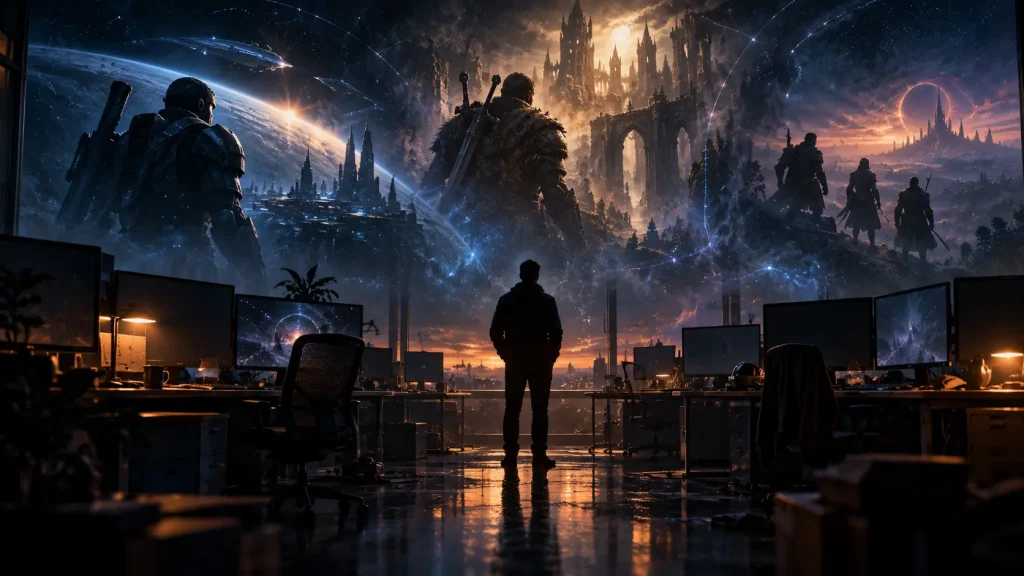
BioWare is officially closing after more than three decades of creating some of gaming’s most memorable role-playing games. The studio announced the news on October 21, 2026, confirming that early development on the next Mass Effect game is also coming to an end.
The announcement marks the end of the studio behind Mass Effect, Dragon Age, Baldur’s Gate, Neverwinter Nights, and Star Wars: Knights of the Old Republic.
BioWare Announces Its Closure in an Emotional Farewell
BioWare shared the news in a statement published on its official X account.
The developer reflected on its history and the community that helped bring its games to life over more than 30 years.
The statement confirmed that BioWare is closing and that development of the next Mass Effect project is ending.
The studio also acknowledged how difficult the announcement was for its employees. Its immediate focus, according to the message, is supporting the developers affected by the closure and helping them through the transition.
Rather than discussing the business reasons behind the decision, BioWare used much of its farewell to recognize the people who played its games, created their own stories, and formed lasting connections with its characters.
For longtime fans, the announcement is particularly difficult because the studio had been working on another installment in the Mass Effect series.

What Happens to the Next Mass Effect Game?
The next Mass Effect game is no longer in development at BioWare.
Originally announced in December 2020, the project was expected to continue the studio’s science-fiction RPG franchise. Early teasers sparked years of speculation about returning characters, familiar locations, and how the next chapter might connect to the original trilogy.
However, BioWare’s announcement confirms that work on the project has ended.
The statement does not provide details about how far development had progressed or whether any of the work could eventually be reused.
It also does not establish whether Electronic Arts might revisit the Mass Effect franchise with another developer in the future.
For now, fans should consider the announced project canceled, although that does not necessarily mean the Mass Effect franchise itself is permanently finished.
BioWare Helped Shape Modern Role-Playing Games
Founded in Edmonton, Canada, in 1995, BioWare became one of the most recognizable names in story-driven RPGs.
The studio developed a reputation for memorable companions, detailed fictional worlds, branching conversations, and player decisions that could influence how stories unfolded.
Some of its most influential games include:
- Baldur’s Gate (1998): One of the defining computer RPGs of its era, helping introduce a new generation of players to party-based Dungeons & Dragons adventures.
- Neverwinter Nights (2002): A fantasy RPG remembered for its multiplayer features and extensive adventure creation tools.
- Star Wars: Knights of the Old Republic (2003): A beloved Star Wars RPG featuring memorable companions, moral choices, and one of gaming’s most famous story twists.
- Mass Effect (2007): The beginning of a science-fiction RPG trilogy that became famous for its storytelling, characters, and player decisions.
- Dragon Age: Origins (2009): A fantasy adventure that introduced players to Thedas and established another major RPG franchise.
BioWare’s influence extended beyond its own franchises, helping shape expectations for story-driven adventures and modern open-world action RPG experiences.
Games such as Baldur’s Gate 3 demonstrate how popular character-driven role-playing experiences remain, even as the industry continues to evolve.
BioWare also contributed to an industry increasingly interested in diverse playable characters, meaningful companions, and female protagonists in video games.
BioWare’s Later Years Were More Complicated
Despite its impressive history, BioWare experienced several difficult years leading up to the closure.
Mass Effect: Andromeda, released in 2017, received mixed reactions from players, particularly regarding its launch quality and departure from the original trilogy’s cast.
Anthem followed in 2019, introducing a multiplayer-focused experience that was significantly different from the traditional BioWare formula. Although its flying mechanics attracted praise, the game struggled to maintain long-term momentum.
The studio eventually abandoned plans for a major Anthem redesign.
Dragon Age: The Veilguard arrived in October 2024 after a lengthy development period. It brought players back to Thedas with a new protagonist, companions, and combat systems.
Although the game received positive reviews from many critics, Electronic Arts later reported that its player engagement fell below the company’s expectations.
BioWare subsequently reduced its workforce as development priorities shifted toward the next Mass Effect.
The October 2026 announcement now brings that development effort, along with the studio itself, to an end.
What Happens to Dragon Age and Mass Effect Now?
BioWare’s closure raises major questions about the future of its two best-known original franchises.
Mass Effect and Dragon Age remain valuable gaming properties with established fan communities, but the farewell statement does not explain what Electronic Arts plans to do with them.
There is no confirmed announcement of a new studio taking over development of either franchise.
It’s also important to distinguish between BioWare closing and its intellectual properties disappearing. A publisher can retain ownership of a franchise even after the original development studio shuts down.
Whether EA eventually decides to revive Mass Effect or Dragon Age remains to be seen.
The End of an Era for RPG Fans
BioWare’s closure is more than the disappearance of another development studio.
For many players, its games were their introduction to RPGs where conversations mattered as much as combat, companions felt like real personalities, and difficult decisions could follow them throughout an entire adventure.
Commander Shepard, Garrus Vakarian, Morrigan, Varric, and countless other characters became memorable parts of gaming culture because of the stories BioWare created around them.
Not every BioWare game was a success, and the studio’s later releases often divided opinion. Still, its contribution to the RPG genre is difficult to overstate.
After more than 30 years, BioWare’s journey has reached its conclusion.
The next Mass Effect game may never arrive in the form fans expected, but the studio’s earlier adventures will continue to be played, discussed, and remembered for years to come.

I’m Alex Mercer, a senior gaming and esports writer at GamingImba. I’ve been involved in gaming for as long as I can remember, and for more than a decade I’ve been writing about competitive play, industry trends, and the culture that grows around games.
My work focuses on esports, online gaming platforms, and how technology continues to shape the way people play, compete, and connect. I’m especially interested in meta shifts, balance changes, and the business decisions that influence modern games behind the scenes.
At GamingImba, I aim to break down complex topics in a way that’s clear, honest, and useful—whether that means analyzing a major tournament, exploring new gaming platforms, or looking at how player behavior evolves over time.
I follow global esports scenes closely, experiment with different games and mods in my free time, and enjoy digging into the details that most players notice but rarely stop to question.